ICANN Staff to WHOIS Task Force

ICANN Staff has sent this message to the combined WHOIS Task Force. Essentially, they disagree with much of the group’s recommendations on how to deal with a conflict between the RAA’s WHOIS provisions and applicable law. Timing of this move is po…

ICANN Staff has sent this message to the combined WHOIS Task Force. Essentially, they disagree with much of the group’s recommendations on how to deal with a conflict between the RAA’s WHOIS provisions and applicable law.Timing of this move is poor; procedurally, it amounts to a staff attempt to veto a Task Force’s decisions: The criticism comes after almost a year of work; the thrust of the group’s recommendations was visible by the time of the ICANN meetings in Kuala Lumpur.On the substance, though, there’s one point where I find myself in agreement with the staff document: Fixing WHOIS, globally, is certainly preferable over tinkering with compliance mechanisms.

More on FC3

After the kernel compilation orgy last night, Fedora Core 3 now runs reasonably stable — sort of, since OpenOffice has some problems. Not only do the same documents look different now when printed — most of the user interface is displayed in a w…

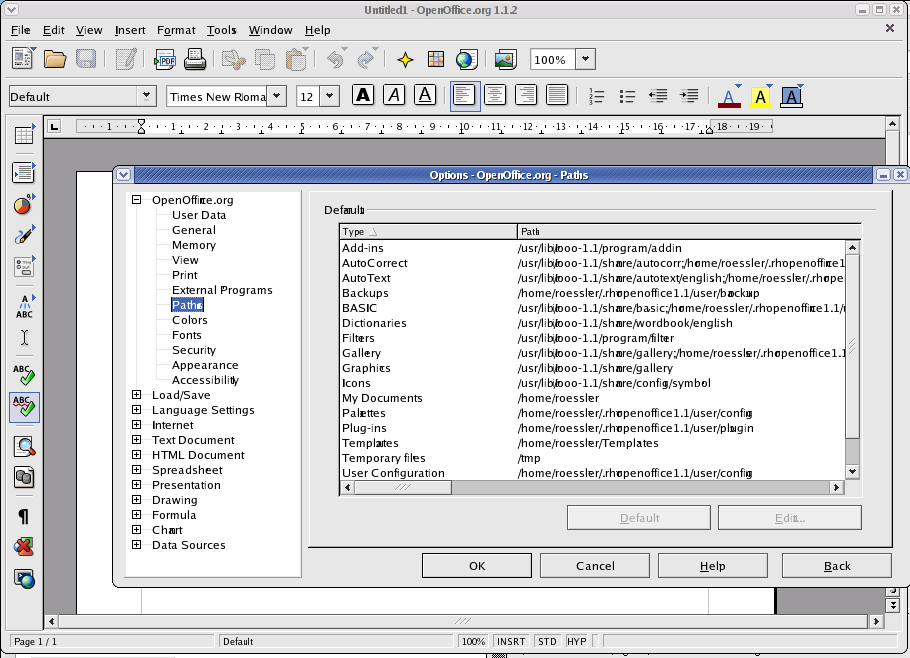
After the kernel compilation orgy last night, Fedora Core 3 now runs reasonably stable — sort of, since OpenOffice has some problems. Not only do the same documents look different now when printed — most of the user interface is displayed in a way that’s somewhere between ridiculous and unreadable.As I said yesterday: These are the things that make me wish I had taken a Mac.(Turns out this is an X server problem; thanks to the people at RedHat, I now have a work-around.)

Compiling Kernels Like It’s 1995

These are the nights when I regret my decision not to go for a Mac as my Laptop: As if it was 1995, I’m sitting here, sleepy, waiting for my PC to finish compiling the Linux kernel — which takes eternities. The reason? I was stupid enough to inst…

These are the nights when I regret my decision not to go for a Mac as my Laptop: As if it was 1995, I’m sitting here, sleepy, waiting for my PC to finish compiling the Linux kernel — which takes eternities.The reason? I was stupid enough to install Redhat’s Fedora Core 3 on that truly cutting edge thinkpad I use, without checking that this problem (which is the same as this problem) was actually fixed — it isn’t, not even in the latest “testing” kernel. Linux has been running rock-solid on this machine for the past six months, until the latest so-called stable kernel, which will leave the keyboard in a completely useless state after any APM suspend/resume.So I’m now rebuilding the last useable FC2 kernel (which doesn’t seem to be available in binary RPM form any more) for use on FC3, to get back my laptop’s full functionality.(Meanwhile, the PDA is still in the process of being repaired; replacement devices can’t be made available, I’m told.)

On New TLDs and Frogs

Writes James Seng, on new gTLDs and the innovation argument often made: Innovation ideas are like frogs’ egg: a thousand hatched only one or two survive to maturity (quote Peter Drucker). Like many others, I love to have that one or two frogs but …

Writes James Seng, on new gTLDs and the innovation argument often made: Innovation ideas are like frogs’ egg: a thousand hatched only one or two survive to maturity (quote Peter Drucker). Like many others, I love to have that one or two frogs but we aren’t sure how to deal with the 999 other dead tadpoles.

Media_httplogdoesnote_wejgt

This argument is in line with the stability concerns one often hears at ICANN meetings: In order to keep gTLD registrations stable, just stick to the current gTLD registries, and block these “unstable” new firms from entering the market. After all, it’s likely that they might fail. The interesting assumption with this approach is that the current set of gTLD operators will remain stable. We don’t care whether frogs are extinct worldwide. Our weather frog is immortal, and that’s all we care about. Ooops, what’s this thing under my shoe?I’m worried by this approach — from a stability point of view: Any given business has a certain chance to fail. So, the question is not so much how can we keep the current registries stable?, but rather, how do we make sure someone else carries on when they fail?Instead of being scared of possible failure, ICANN should think about how to deal with it. ICANN should be thinking about escrow solutions. ICANN should be thinking about how it can contribute to establishing a healthy and sufficiently large pool of operational registry businesses. And it should be thinking about how to help make sure that the registrations in any given TLD remain an asset in case of bankrupcy of a registry business, and not become a liability: Make sure that, when a registry fails, someone else has a business interest in picking up the remains.

Airlines…

I’m back from a week in Boston. Last time, I made some bad experiences with KLM/NWA. This time, I took Luxair for the short haul part of the trip and Lufthansa for the transatlantic flight. What should I say — they were roughly on time (apart fro…

I’m back from a week in Boston. Last time, I made some bad experiences with KLM/NWA. This time, I took Luxair for the short haul part of the trip and Lufthansa for the transatlantic flight.What should I say — they were roughly on time (apart from that ugly two hour delay in Frankfurt), and (as usual) more organized than KLM and NWA, but I’m far less satisfied than I have been with Lufthansa flights to other destinations in the past.Annoyances started with the fact that Lufthansa is operating its US flights from a part of Frankfurt Airport which is accessible to transferring passengers from incoming flights. So, once you get close to your gate (way past passport control and usual security checkpoints), you have to go through another security control: A “routine” pat-down search, since they just don’t have the usual metal detector gates there. Queues before this security checkpoint at times counted some 200 people waiting. Once through this check, there were close to no eating or shopping opportunities.On the flight itself, service was rather slow. On the daytime flight to Boston, the annoying part was sitting in front of that empty tray for half an hour; on the flight back, the annoying part was that they would keep Economy class passengers awake for more than half of the flight. The meal served on the flight back was a little problematic as well: First, garlic was one of the main vegetables; second, they were serving joghurt pre-packaged at normal air pressure — you can probably imagine the effect of opening this on an airplane.Finally, mileage: Lufthansa has reduced the number of miles they give on Economy class tickets significantly; I’m getting some 1800 miles for each trans-atlantic segment. In practical terms, this means that frequent flier benefits and upgrades have moved far enough away to make the Miles & More program mostly uninteresting — unlike KLM’s Flying Dutchman, where benefits are granted at lower mileage, and reasonable mileage is granted for Economy class flights.For the moment, I find myself not having a preferred airline any more. Probably, I’ll try Swiss next.(On the positive side, I should add that the classical music audio program was, unlike the movies, exquisite, including a rare recording of a Schumann symphony with Furtw舅gler conducting the Berlin Philharmonic Orchestra; also, the service provided in Frankfurt to a colleague who sits in a wheelchair was stellar.)


Finally!

Finally, back online. But, of course, not without a final bit of absurdity. We called P&T around noon, asking for the state of affairs. The technical department told us that, well, maybe they were going to do their work this afternoon, maybe not, …

Finally, back online. But, of course, not without a final bit of absurdity.We called P&T around noon, asking for the state of affairs. The technical department told us that, well, maybe they were going to do their work this afternoon, maybe not, and we couldn’t do activation today. We were further told that the commercial branch was evil, and promising unrealistic time lines out of the blue. We called the commercial branch, and asked what this was supposed to mean — after all, we had been promised “no later than Friday afternoon.” Well, they told us, call at 4pm.We did, and — surprise! — the technical branch’s hotline was indeed able to find an engineer who could then perform the final steps.

A customer-centric business process

The DSL-in-Luxembourg saga continues: Apparently, the final steps of the relevant business process are based on the customer regularly calling some hotline number. This call is entirely futile unless engineering has put in place some missing cable…

The DSL-in-Luxembourg saga continues: Apparently, the final steps of the relevant business process are based on the customer regularly calling some hotline number. This call is entirely futile unless engineering has put in place some missing cable, somewhere. Only after the customer’s call, another, final engineering step is possible. The only way for the customer to detect whether that damned cable is in place is calling, and being placed on hold until the customer service representative has talked to the engineering department.

LuxDSL next week. Really.

At least, that’s what we’ve been told for the past three weeks, in varying words. Last week was the first time that they gave us a precise time line — according to which things should work now, as in, “this minute.” Today, we called to “activate”…

At least, that’s what we’ve been told for the past three weeks, in varying words. Last week was the first time that they gave us a precise time line — according to which things should work now, as in, “this minute.” Today, we called to “activate” DSL (another of these useless extra hassles which P&T Luxembourg forces on its customers) , and were told that we should rather wait another week (or maybe longer), so they could actually do the work they were supposed to do last week.Update, Tuesday: After bugging more people over the phone, it’s now “no later than Friday afternoon; the letter with new access data has been sent out.” I have no idea what we need new access data for, but hey, that counts as a minor problem.

The IP Lobby’s Place in ICANN

Ross Rader writes on the IP lobby’s role in Internet (and ICANN) matters, and vents quite a bit of frustration. ICANN, meanwhile, has assigned a new role to Intellectual Property Interests in its Strategic Plan: The same people who want to enforce…

Media_httplogdoesnote_dxjgc

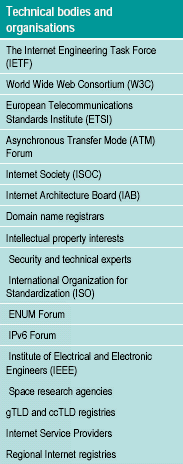
Ross Rader writes on the IP lobby’s role in Internet (and ICANN) matters, and vents quite a bit of frustration.ICANN, meanwhile, has assigned a new role to Intellectual Property Interests in its Strategic Plan: The same people who want to enforce the accuracy of WHOIS data elements which aren’t even collected according to the RAA (namely, registrant phone number, facsimile number, and e-mail address) are now, on page 7 of the plan, classified as “technical bodies and organizations.”While I’m on it, another interesting part of the plan is its description of the Policy Development Process on pages 12 and 13, where Advisory Committees now submit policies to the ICANN Board for ratification. (They can’t.)